Production Automation — Where to Start?
Where to start with production automation: a 6-step process audit, realistic first-project budgets from €7,000, and the 3 costs most firms forget.
For most manufacturers, production automation is no longer a “someday” topic – with multi-shift operations and a tight labour market, it is often the most reliable way to maintain output when the people you would otherwise hire simply are not there. In 15 years of working with manufacturing plants in north-eastern Poland, we have seen which first projects pay back quickly and which end in expensive disappointment. Below are the specifics: a step-by-step process audit, realistic budgets for typical first projects, and the three cost items companies most often leave out of the calculation.
Where to start depends on your industry
The examples below come from plants in the Podlaskie region of north-eastern Poland, where we are based – but the entry points are much the same in comparable industries anywhere. Local industry spans dairy and food processing, furniture and wood, domestic appliances, metalworking, window and door manufacture, agricultural machinery, and packaging. Each has its own natural first step:
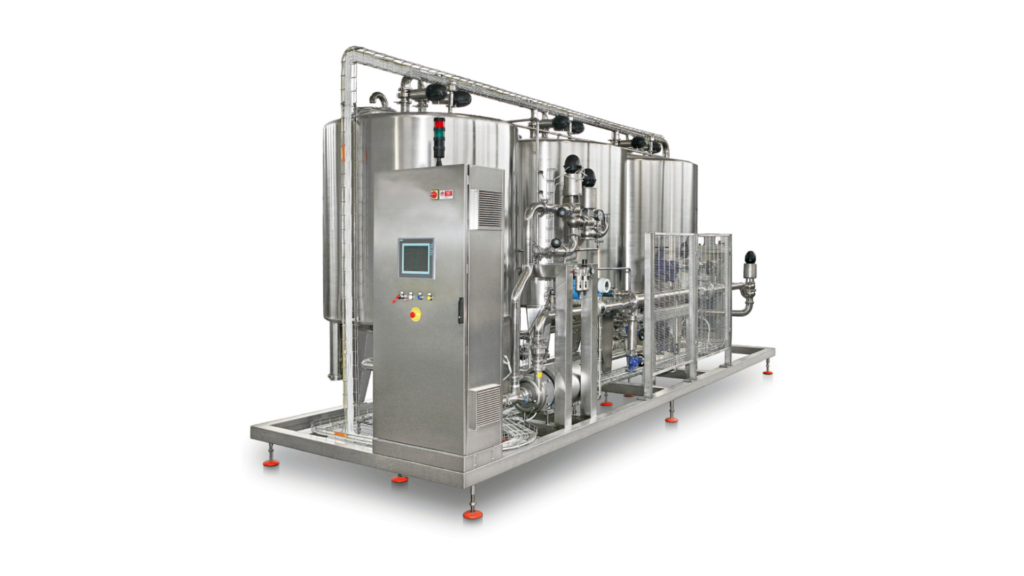
- Food and dairy – strict hygiene requirements, three-shift operation and repetitive cleaning cycles. A common starting point is modernising the controls of an existing installation, as in our CIP (clean-in-place) station modernisation for a dairy plant.
- Furniture and wood processing – large workpieces and monotonous operations at the end of the line. Packaging and material handling between operations usually deliver the fastest return here.
- Domestic appliances and electrical equipment – short cycle times and precision assembly. Example: a semi-automatic machine for assembling shaver heads with a servo drive and an HMI panel.
- Metalworking (including aluminium) and window and door manufacture – precision and consistency. For a window manufacturer we built an automatic 3-axis CNC milling machine for aluminium glazing bars.
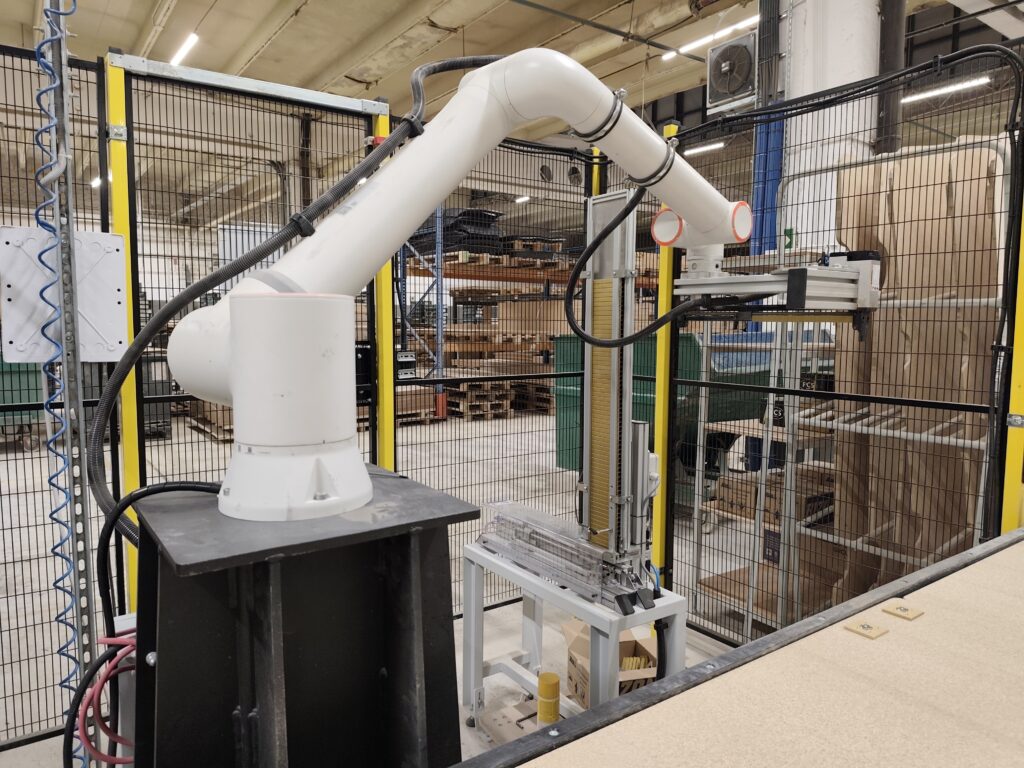
- Packaging – carton forming, crate nailing and palletising. This is where our carton forming machine and crate assembly robot were built.
We have worked for manufacturers with operations in the region, including Mlekovita (dairy), Forte (furniture) and Biazet (domestic appliances). An integrator has to understand the realities of local industries, not just component catalogues.
Where to start with production automation? A six-step process audit
The best way to start production automation is with a process audit: find the bottleneck, measure cycle times and downtime, check whether your parts are dimensionally consistent, talk to the operators, calculate both the cost of the current situation and the cost of running the new equipment – and only then choose a first project limited to a single station. A project selected this way typically pays for itself within 12–24 months.
The worst possible start is buying a robot because a competitor has one. This is the audit we run with our clients:
1. Find the bottleneck – but check that you can sell the extra output
Walk the line from raw material to dispatch and see where work in progress piles up, or where production stops when one person is missing. Watch out for a common mistake: extra units from the bottleneck are only profit if the plant can actually sell them. If demand is limited, start with the station that carries the highest labour cost or the highest scrap rate – in that case, automation reduces unit cost rather than simply adding capacity.
2. Measure cycle times and downtime
A stopwatch and a week of notes are enough: cycle time, minor stoppages, changeover times and breakdowns. Without numbers, every integrator’s quotation is a shot in the dark – and you will have no way to verify the results after commissioning.
3. Check whether your parts and materials are consistent
This is the most common cause of failed implementations. Count your product variants, measure dimensional variation, and assess the quality of pallets, cartons and film. Operators compensate by hand for variation that a machine will not tolerate. If the part is not consistent, the first stage of the project is standardisation, not a robot.
4. Talk to the operators
The people working at the machine know best what breaks, what is exhausting and where defects appear. In our projects, operators’ comments regularly change the original concept – for the better.
5. Calculate both sides of the equation
On the savings side: the fully loaded cost of employment (not just gross salary – add employer’s social security contributions, sick leave and holidays), scrap, customer returns and warranty claims, and seasonal overtime. On the cost side: not just the implementation, but also annual running costs – maintenance, wear parts, energy and compressed air, training. Leaving out that second column is the most common reason why the ROI “on paper” does not match reality. We described the full calculation method in our guide to how much production line automation costs.
6. Choose a first project – small, but visible
A good first project is limited in scope (one station, one process), has a measurable effect and sits at the fast end of the 12–36-month payback typical in the industry – realistically 12–24 months when the station is well chosen.

Typical first automation projects
All figures below exclude VAT. In our experience, the most common first steps are:
- Modernising the controls of an existing machine (PLN 30,000–50,000 / approx. €7,000–12,000) – a new PLC, HMI panel and variable-speed drives. The cheapest way in, and the improvement in reliability shows immediately.
- A semi-automatic assembly or packaging station (PLN 50,000–150,000 / approx. €12,000–35,000) – the operator loads and unloads the part, the machine performs the repetitive operation.
- Robotic palletising or packaging (PLN 150,000–500,000 / approx. €35,000–115,000) – for the roles that are hardest to staff on every shift.
- Automated quality inspection – sensors and vision systems. As a first project this works for simple, unambiguous features: presence or absence of a component, a measurement, a code reading. Detecting cosmetic or surface defects requires stable lighting and a precise definition of the defect, so it is better suited as a second or third step. Cost here depends mainly on the scope of inspection and the number of features to be checked.
Full price ranges and the payback calculation are set out in our guide to automation costs and ROI.
Three cost items companies most often forget
Machine safety and conformity assessment
For a robotic station this is not optional: risk assessment, fencing, light curtains or scanners, an appropriate safety control system, and CE marking for the newly built assembly of machinery. With a retrofit, there is the added question of whether the rebuild constitutes a substantial modification requiring a new conformity assessment. This can be a significant part of the station cost – it belongs in the budget from day one.
Utilities and shop-floor conditions
The capacity of your incoming electrical supply, compressed air flow rate and purity class to ISO 8573-1, floor space and floor loading capacity. A dairy adds high-pressure washdown and stainless steel construction with a high IP rating; wood and flour processing add combustible dust and the ATEX requirements that come with it. For most plants these are real design constraints, not paperwork.
Life after commissioning
A set of critical spares held on site, training for operators and maintenance staff, and an annual maintenance budget. A machine without properly trained staff will sit idle at the first minor fault – and a few shifts of downtime can wipe out the savings of many weeks.
Why proximity matters when you choose an integrator
You can order an implementation from an integrator on the other side of the country. The question is what happens when the line stops because of a failed sensor or a software bug.
- Faster site attendance – from Białystok most plants in the region are under two hours away, so subject to team availability we normally attend within one working day, and we solve some problems remotely.
- Lower travel and commissioning costs – travel and accommodation for a team coming from the other side of the country are a real line item, especially during long commissioning periods.
- Knowledge of local conditions – from industry specifics to the suppliers and contractors you have to coordinate with on the shop floor.
- A long-term relationship – after commissioning come modifications, upgrades and training for new operators. Someone will still need to know that machine three years from now.
You will find our full range of services on our production automation and robotics page, and examples of our work in completed automation projects.
Frequently asked questions
Does automation make sense in a small manufacturing company?
Yes – provided the first project is chosen well. Control system modernisation starts at approximately PLN 30,000 (€7,000), excluding VAT, and often pays back faster than large implementations, because it targets the most painful process.
How much does production automation cost?
A simple control modernisation costs PLN 30,000–50,000 (approx. €7,000–12,000), excluding VAT, a semi-automatic station PLN 50,000–150,000 (approx. €12,000–35,000), and a robotic station PLN 150,000–500,000 (approx. €35,000–115,000). Detailed ranges and the payback calculation are covered in our separate cost guide.
Which process should be automated first?
The line’s bottleneck, or the station where staff are hardest to retain: packaging, palletising, monotonous assembly, repetitive inspection. We help identify it during a free visit to your shop floor.
Do you work outside your home region?
Yes – we cover the whole Podlaskie region in north-eastern Poland, and we deliver larger projects elsewhere in Poland.
How long does a first automation project take?
Counting from contract signature to acceptance on the shop floor: control modernisation usually takes 1–3 months, a semi-automatic station 2–4 months, and a robotic station 3–6 months. We schedule the cut-over work – tying the new equipment into the existing line – for planned shutdowns or weekends, to limit the impact on production.
Is funding available for automation?
Polish CIT and PIT payers can use the robotisation tax relief, alongside regional programmes. In its current form it covers costs incurred up to the end of 2026, so on longer projects check your spending schedule – and confirm the position for your tax year with your accountant before you build it into a business case. We help prepare the technical specification for the application, and we will cover funding in more detail in a separate article.
Start with a free visit to your shop floor
Wondering what to automate first in your plant? We will visit your site, walk the line with you and show you where automation will pay back fastest. The visit is free and without obligation, and you receive your quotation within 48 hours of the visit.
📞 Call: +48 796 019 414
✉️ biuro@automation.net.pl
📍 Automation Dariusz Kulik, Ciesielska 2/20, 15-542 Białystok, Poland – contact details