PLC Controllers in Industrial Automation – Types, Programming and Selection Guide
Learn about PLC controllers in industrial automation – types, programming languages (IEC 61131-3), selection criteria, and leading manufacturers including Xinje XF series with blade system architecture.
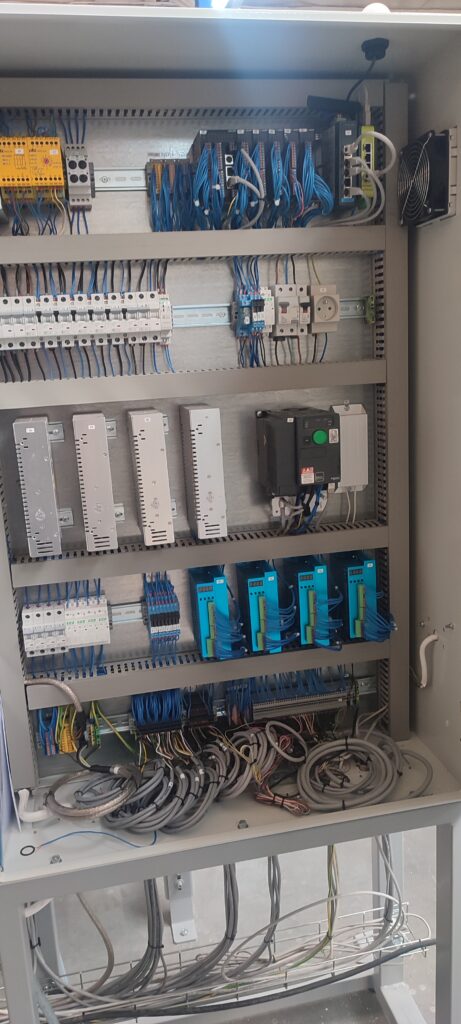
PLC controllers industrial automation is a critical topic for anyone building modern manufacturing systems. In our previous articles, we discussed production automation, the robotization of industrial processes, and the role of SCADA and MES systems. All these elements are unified by the PLC controller – the „brain” of every automated production line. This comprehensive guide will explore what PLC controllers are, their types, programming methods, and how to select the right one for your facility.
Table of contents
What Are PLC Controllers?
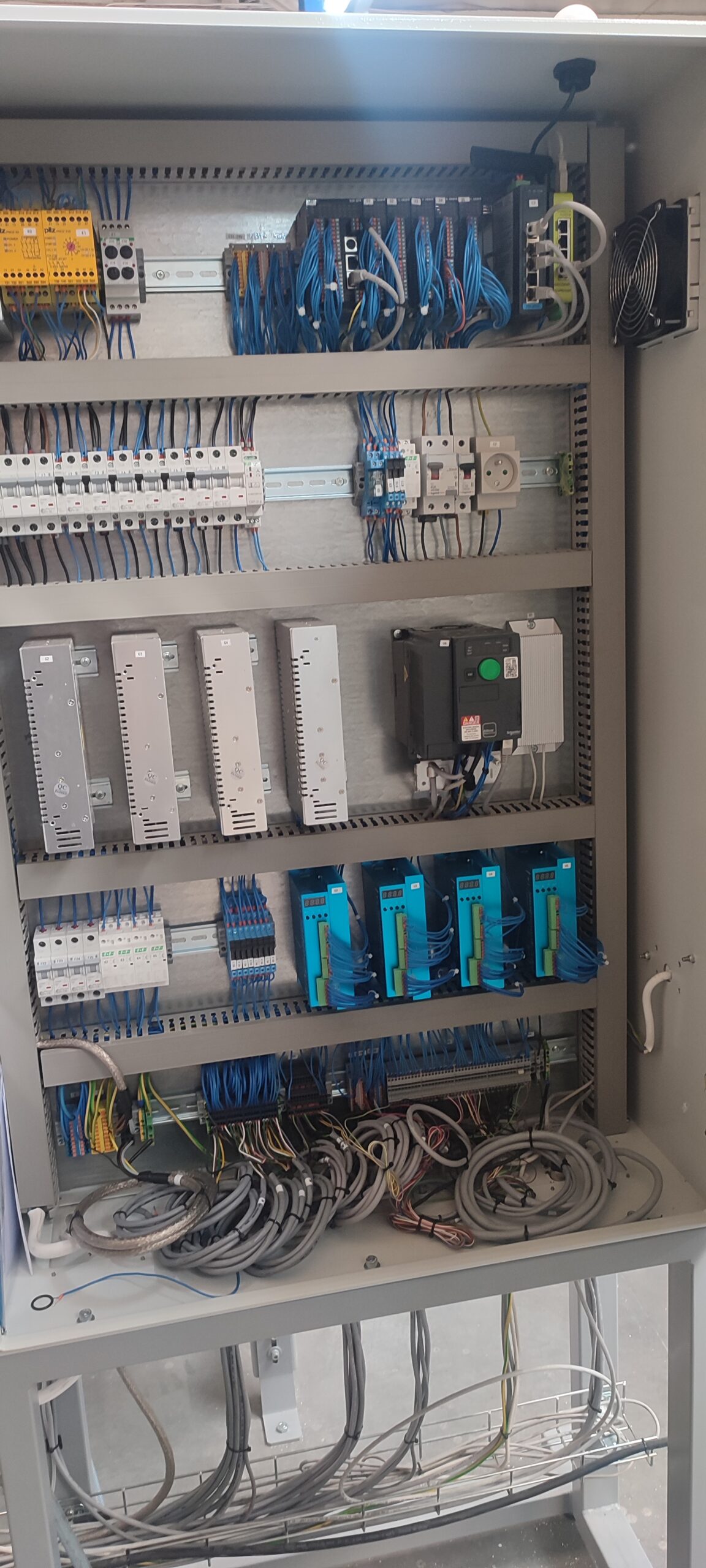
A PLC (Programmable Logic Controller) is an industrial-grade computer designed to operate in real-time and withstand harsh manufacturing environments. It consists of a central processing unit (CPU), input/output (I/O) modules, and communication modules that enable integration with various industrial protocols such as PROFINET, EtherNet/IP, Modbus TCP, EtherCAT, and OPC UA.
Key Functions of PLC Systems
Data Acquisition – continuous collection of data from sensors, industrial devices, and equipment in real time.
Process Control – real-time regulation of manufacturing processes based on acquired data.
Communication – seamless integration with HMI (Human Machine Interface) panels and supervisory systems.
Diagnostics and Monitoring – real-time system health monitoring and fault detection.
Leading PLC Manufacturers
Siemens – SIMATIC S7-1200/1500 series with TIA Portal programming environment, industry-leading performance and extensive diagnostic capabilities.
Mitsubishi – MELSEC iQ-R series, featuring cycle times below 1 ms and excellent real-time performance.
Allen-Bradley – ControlLogix and CompactLogix controllers, widely used in North American industries.
Beckhoff – PC-based control systems with EtherCAT real-time communication.
Xinje – XD3/XD5 and XL series with LAD/IL/C programming and CODESYS support. The newest XF series features a blade system architecture with 200 Mb/s bus bandwidth, 16-bit analog resolution (0.2% accuracy), microsecond response times, and supports up to 32 modules. This series represents a significant advancement in compact control solutions. Complete offer, selection guidance and knowledge base: Xinje.pl store (in Polish), run by our company.
Omron and Schneider Electric – providing compact controllers for small to medium-sized automation projects.
PLC Programming Languages (IEC 61131-3 Standard)
LD (Ladder Diagram) – graphical representation using ladder logic, ideal for basic control sequences.
FBD (Function Block Diagram) – block-based programming for complex logic and PID control loops.
ST (Structured Text) – high-level language for advanced algorithms and complex processes.
IL (Instruction List) – assembly-like language offering fine-grained control over program execution.
SFC (Sequential Function Chart) – designed for sequential and parallel process flows.
Selecting the Right PLC Controller
When choosing a PLC controller for your facility, consider these key parameters:
Number of I/O points – assess your current needs and add 20-30% reserve capacity for future expansion.
Cycle time – the time required for the controller to read inputs, execute the program, and update outputs. Critical for time-sensitive processes.
Communication protocols – ensure compatibility with your existing industrial network infrastructure.
Programming environment – choose a platform that your team is familiar with or willing to learn.
Environmental conditions – verify that the controller can operate reliably in your facility’s temperature, humidity, and vibration levels.
PLC and HMI Integration
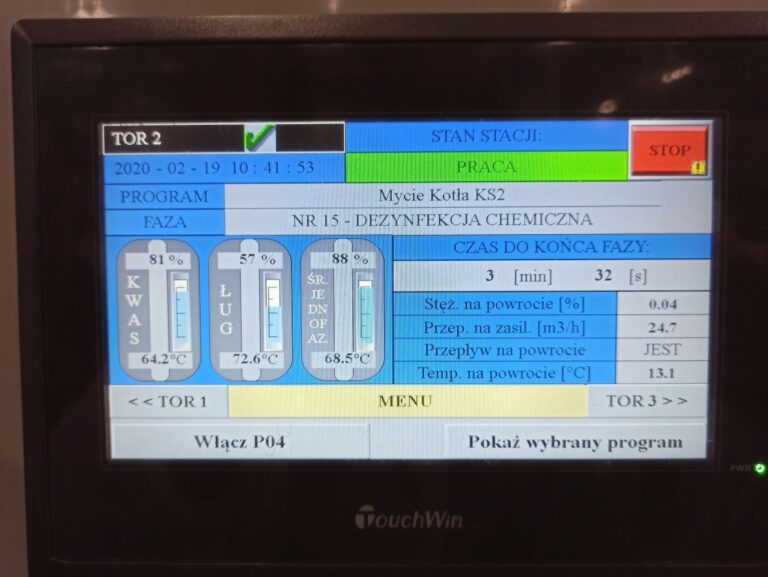
The combination of a PLC controller with an HMI (Human Machine Interface) panel creates a complete control system. The HMI provides visual representation of processes, allowing operators to monitor production in real-time. Modern systems use color-coded icons, real-time gauges, and historical trend displays to enhance operator awareness and response capabilities. For a broader context of industrial automation implementations, see our article on production automation. The international standard IEC 61131-3 defines the programming languages used by PLC controllers from all leading manufacturers.
Conclusion
PLC controllers are the foundation of modern industrial automation. From industry giants like Siemens and Mitsubishi to innovative manufacturers like Xinje, today’s market offers solutions for every scale and complexity level. Understanding the capabilities of different controllers, programming languages, and selection criteria ensures you invest in the right technology for your facility’s needs. Whether you’re upgrading legacy systems or implementing new automation solutions, the choice of PLC controller directly impacts your facility’s efficiency, reliability, and scalability. According to International Federation of Robotics data, PLC controllers industrial automation applications continue to grow worldwide, confirming the growing importance of programmable logic controllers in smart manufacturing.
The practical side of these topics — scope of work, budget bands and lead times — is described on the HMI panels and PLC controllers service page.